CNC machining tolerances: what ±0.001″ actually means for your program
CNC machining tolerances: what ±0.001″ actually means for your program
Tolerance is one of the most misunderstood specs in a manufacturing drawing. Engineers write it in. Suppliers quote against it. But whether it actually gets held through production is a different question entirely.
±0.001″ is tight. It’s the kind of spec that shows up on flight control components, orthopedic hardware, fuel system parts, and any other application where dimensional variation has real consequences. It’s also the spec that separates shops that can run the job from shops that say they can.
What ±0.001″ requires in practice
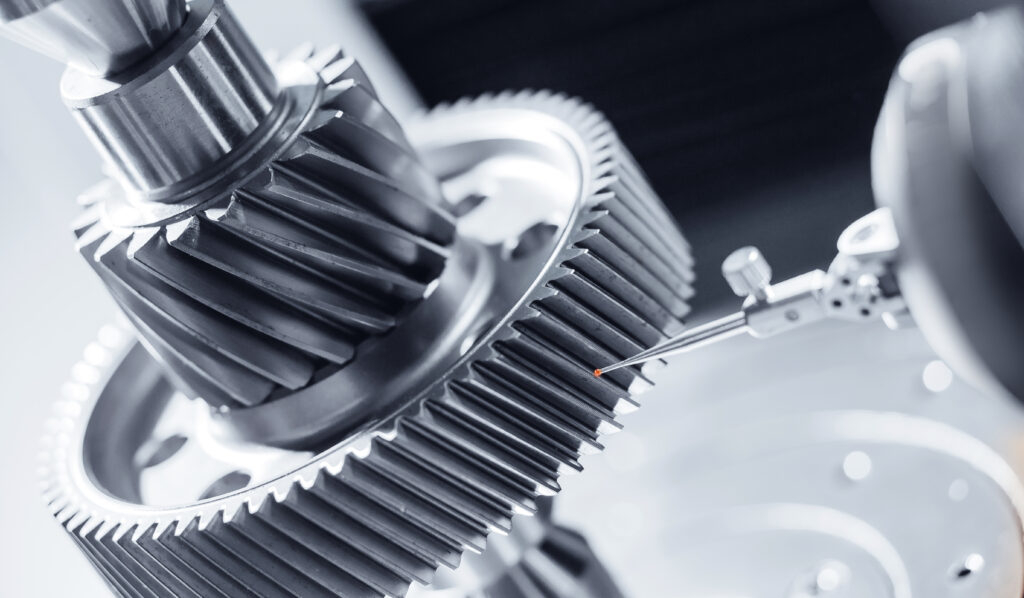
Holding ±0.001″ consistently isn’t just about having the right machine. It requires stable fixturing, temperature-controlled environments, calibrated tooling, and inspection equipment that can actually verify what was built. CMMs, optical comparators, and surface profilometers aren’t optional at this tolerance range. They’re how you prove the part is right.
It also requires the right process selection upfront. Some geometries that look straightforward on paper become difficult at tight tolerance because of tool deflection, material springback, or thermal expansion during the cut. A drawing review before production starts catches these before a single part is cut.
When ±0.001″ is the right call
Not every dimension on a part needs the same level of control. Over-tolerancing drives up cost, slows production, and doesn’t improve part performance. The right approach is to apply tight tolerances to critical features only: mating surfaces, bore diameters, critical datums, and any feature where variation directly affects fit, function, or assembly.
General dimensions that don’t affect performance should be called out at standard machining tolerances. A drawing that specifies ±0.001″ on everything is a drawing that hasn’t been through a real DFM review.
5-axis machining and tight tolerances
5-axis CNC machining is often the right answer when parts have complex geometry and tight tolerances in multiple planes. By machining multiple faces in a single setup, you eliminate the error stack that comes from repositioning a part across multiple operations. Fewer setups means fewer opportunities for tolerance drift.
Precision Expedited’s in-house 5-axis milling and turning capabilities support tolerances to ±0.001″ across metals, hard alloys, and engineering plastics. Every part is inspected before it ships.
The review that happens before production
Every drawing that comes to Precision Expedited gets reviewed within 24 hours. That review includes tolerance analysis, DFM flags, and risk callouts before anything goes to a supplier. If a feature is going to be difficult to hold, you find out before it becomes a problem. That’s not a portal feature. It’s a person looking at your drawing.
Send us your drawings
If you’re running tight-tolerance programs and need a manufacturing partner who can hold the spec and prove it, send us your files.