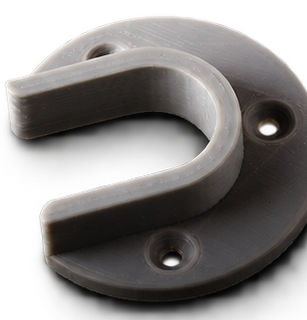
Industrial 3D printing.
A process chosen for the part.
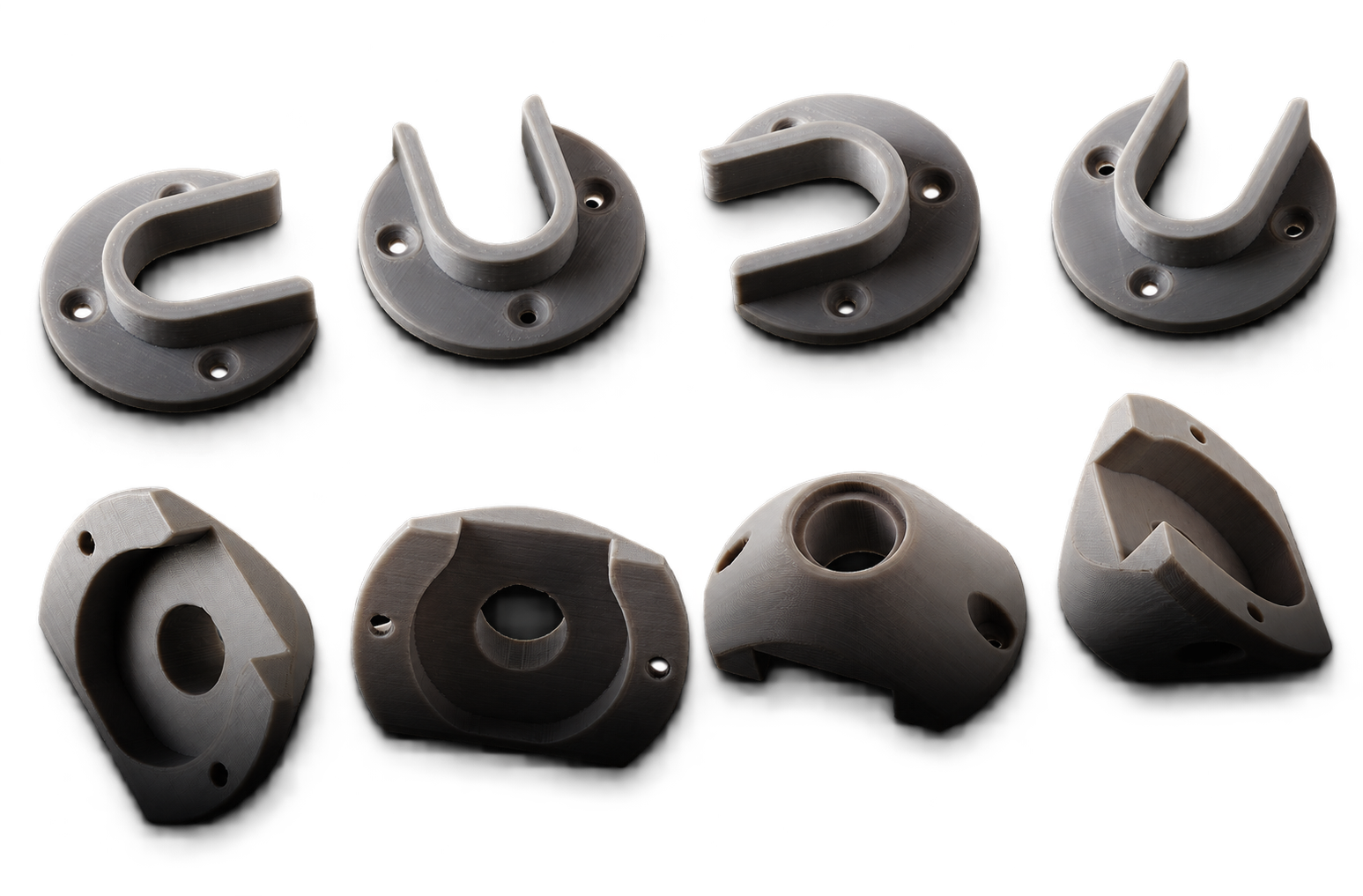
Your team already knows
enough acronyms.
Industrial additive manufacturing through vetted suppliers. We review intended use, geometry and material requirements before choosing a process, then coordinate printing, post-processing + inspection.
The specs.
Not the sales pitch.
Working ranges and process options across our qualified network. Send the actual drawing to confirm feasibility, tolerance and documentation requirements.
- Polymer materials
- ABS · PLA · Nylon · Carbon fiber filled nylon · PC · TPU/TPE · PPSF/PPSU · Ultem · Resins
- Metal materials
- Stainless steel · Aluminum · Titanium · Inconel · Tool steel
- Surface finishes
- As-built · Sanded · Painted · Clear-coated · Metal finishing where applicable
- File formats
- STEP, IGES, STL, native CAD
- Quote turnaround
- Within 24 hours · Fast-turn available for most processes
- Quality
- ISO 9001:2015 · Engineer review for process selection · Inspection before shipment
Related reading
More on when printing is the right call, and when it isn’t.
Good questions.
No ticket numbers.
Most prototype orders turn around in 2 to 5 business days depending on part size, geometry, and material. Simple concept models can move even faster. Complex geometries or larger builds add time.
Any commercially available resin or filament, plus industrial powders for processes like SLS and MJF. That includes standard nylons, glass-filled and carbon fiber-filled nylon for load-bearing parts, and metal powders through DMLS for aerospace and medical applications. Material choice depends on whether the part needs to look right, function under load, or both.
It depends on what “functional” means for the part. SLS and MJF nylon hold up to mechanical testing better than SLA or PolyJet resin, which are built for form and fit checks, not load. Carbon fiber-filled nylon is the call when the prototype has to survive real stress during validation. Our engineers can help you match process to test requirement before you print.
Once the design is locked and the part needs to perform or look exactly like the production version, or once volume climbs past what printing supports economically. Additive is built for iteration speed, not scale. We manage that transition as one continuous program instead of a new RFQ.
Additive is typically used for prototyping and validation on aerospace and medical programs rather than final flight or implantable parts, since those usually require our vetted network’s CNC machining to tight tolerances or DMLS with post-machining. We’ll tell you upfront which process the end-use application actually requires.
Print with a purpose.
Tell us what the part needs to prove, survive or become. We’ll help plan the route.