Injection molding DFM: the design mistakes that show up after tooling is cut

Injection molding DFM: the design mistakes that show up after tooling is cut
Injection molding has one of the highest costs of late-stage design changes in any manufacturing process. Once tooling is cut, design changes mean tooling modifications. Those cost time and money. If the change is substantial, they mean scrapping the tool entirely.
The problems that cause those changes almost always exist in the design before tooling ever starts. They’re visible to someone who knows what to look for. That’s what a DFM review is for.
Wall thickness: the most common problem
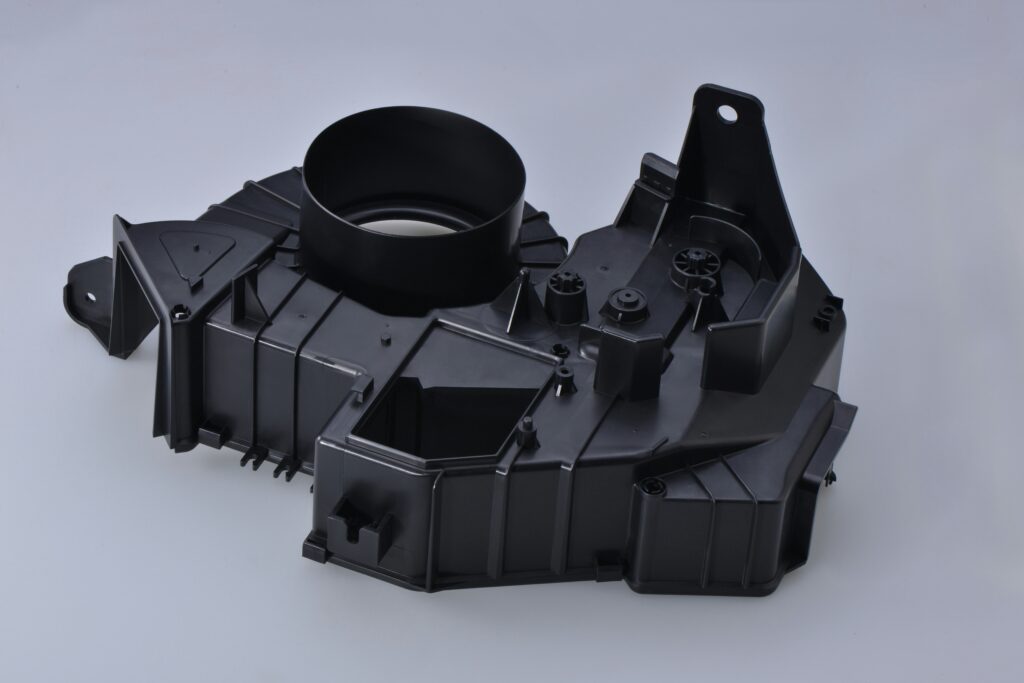
Non-uniform wall thickness is the most frequent DFM issue in injection molded parts. When walls vary significantly in thickness, plastic cools at different rates in different sections of the part. That differential cooling creates sink marks on cosmetic surfaces, warpage that takes the part out of tolerance, and internal stress that weakens the structure.
The fix is straightforward in design. It’s expensive after tooling. Uniform wall thickness, typically between 0.060″ and 0.120″ depending on material, is the target. Where thick sections are structurally necessary, coring them out maintains uniform wall while preserving strength.
Draft angle: why parts won’t release cleanly
Every vertical wall in an injection molded part needs draft. Draft is the slight taper applied to walls parallel to the direction of pull so the part releases cleanly from the mold. Without it, the part drags on the tool surface, creating surface defects, wear on the tooling, and inconsistent release across the production run.
Standard draft is 1° to 2° per side for most applications. Textured surfaces need more. Parts designed without draft in the CAD don’t magically acquire it during tooling. This is caught in design review or it’s a problem after the tool is built.
Undercuts and how they drive tooling cost
An undercut is any feature that prevents the part from releasing straight out of the mold. Internal threads, side holes, clips, and certain snap-fit features are common examples. Undercuts aren’t automatically disqualifying, but they require side actions, lifters, or collapsible cores in the tooling, each of which adds cost and complexity.
The DFM question is whether the undercut is functionally necessary or a design artifact that can be eliminated. Often it’s the latter. Redesigning to eliminate an unnecessary undercut before tooling starts is a straightforward change. Redesigning after is a tooling cost.
What a drawing review catches before production
At Precision Expedited, every injection molding job gets a drawing review before it goes to a supplier. Wall thickness, draft, gate placement, sink risk, parting line location, and material selection all get evaluated. You get DFM flags and risk callouts within 24 hours of sending your files. The goal is to find the problems before the tool is cut, not after.
Send us your drawings
If you’re moving an injection molded part toward tooling, send us the design first. We’ll review it and tell you what we see before production starts.