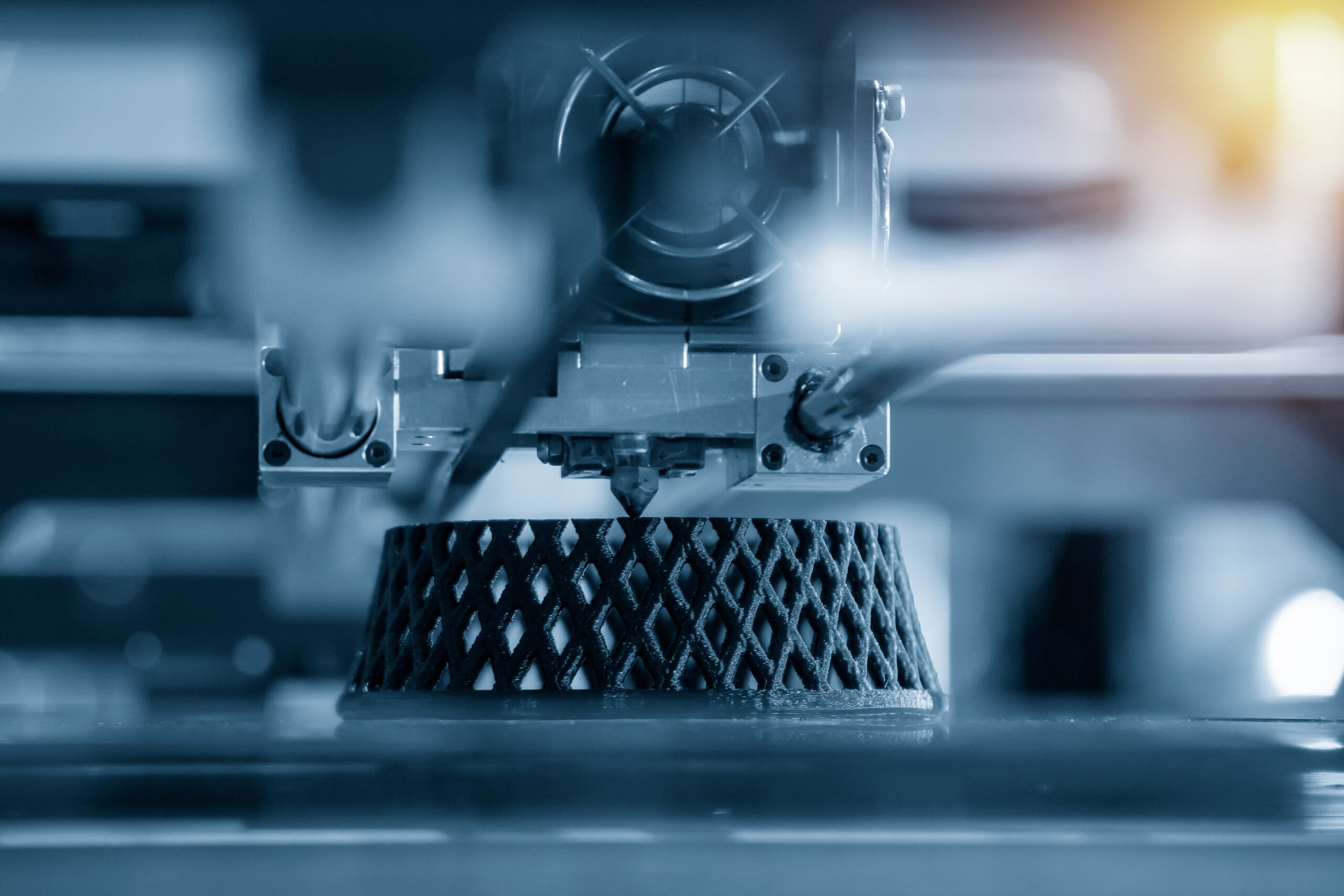
Industrial 3D printing services matched to the part
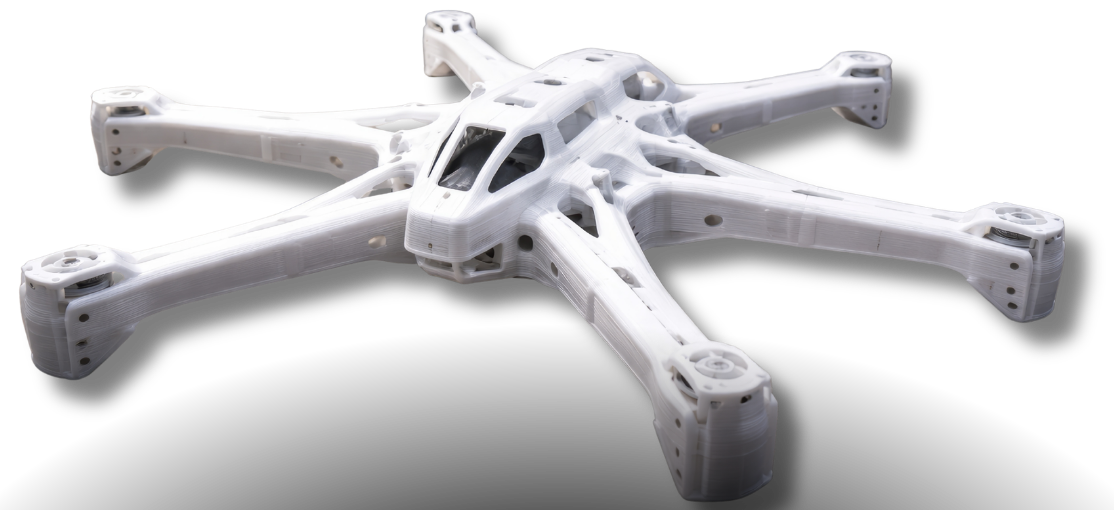
The process should fit the part. Your team already knows enough acronyms.
FDM, SLA, SLS, PolyJet + DMLS through vetted additive suppliers. We review geometry, material requirements + intended use before selecting the process. One project manager coordinates printing, post-processing + inspection.
Choosing Your 3D Printing Process
Not every part belongs on the same machine. Here is how we match the process to the requirement.
Metal 3D Printing (DMLS)
Direct Metal Laser Sintering. Fully dense metal parts, built layer by layer.
Materials: Stainless steel. Aluminum. Titanium. Inconel. Tool steel.
Right when: The part has to be metal and the geometry makes machining impractical.
Common parts: Aerospace brackets. Conformal cooling channels. Lightweighted structural components.
SLA 3D Printing (Stereolithography)
Liquid resin cured by laser, one layer at a time. The finest surface finish and sharpest feature resolution of any process we run.
Materials: Standard resins. Engineering resins. Optically clear.
Right when: Appearance matters more than load.
Common parts: Cosmetic prototypes. Presentation models. Fit checks with fine detail. Clear parts.
SLS 3D Printing (Selective Laser Sintering)
Nylon powder fused by laser. No support structures required, so geometry that would be impossible or expensive on other processes comes off the machine intact.
Materials: Nylon 11. Nylon 12. Glass filled nylon.
Right when: The geometry is complex and the part has to function, not just look right.
Common parts: Complex internal channels. Living hinges. Snap fits. Short-run end-use components.
MJF 3D Printing (Multi Jet Fusion)
Nylon parts with more consistent mechanical properties and finer detail than standard SLS, at higher throughput.
Materials: Nylon 12. Glass filled nylon.
Right when: You need dozens or hundreds of functional nylon parts, not a handful.
Common parts: Production housings. Ducting. Brackets. End-use nylon components at volume.
FDM 3D Printing (Fused Deposition Modeling)
Thermoplastic filament extruded layer by layer. The workhorse for durable parts, large-format builds, and high-temperature applications.
Materials: ABS. PC. Ultem. PPSF/PPSU. Carbon fiber filled nylon.
Right when: The part has to survive real conditions, not sit on a desk.
Common parts: Functional housings. Jigs and fixtures. High-heat components. Large-format assemblies.
PolyJet 3D Printing
Photopolymer jetted and cured in fine layers. Rigid and flexible materials can be combined in a single build.
Materials: Rigid photopolymers. Flexible photopolymers. Full color.
Right when: You need to communicate a design, not test it under load.
Common parts: Multi-material prototypes. Overmold simulations. Full-color models
Specifications
These are our standard parameters. If your part falls outside them, send the drawings anyway. The jobs other suppliers turn down are often the ones we do best.
- Minimum part size
- 0.125″ x 0.125″ x 0.125″
- Maximum part size
- 56″ x 56″ x 30″
- Polymer materials
- ABS · PLA · Nylon · Carbon fiber filled nylon · PC · TPU/TPE · PPSF/PPSU · Ultem · Resins
- Metal materials
- Stainless steel · Aluminum · Titanium · Inconel · Tool steel
- Surface finishes
- As-built · Sanded · Painted · Clear-coated · Metal finishing where applicable
- File formats
- STEP, IGES, STL, native CAD
- Quote turnaround
- Within 24 hours · Fast-turn available for most processes
- Quality
- ISO 9001:2015 · Engineer review for process selection · Inspection before shipment
If you’ve been quoting it on a portal and wondering why the parts aren’t right, send us the files.
Common Questions About 3D Printing and Rapid Prototyping
A few things engineers and procurement teams ask before they send a prototype file.
Most prototype orders turn around in 2 to 5 business days depending on part size, geometry, and material. Simple concept models can move even faster. Complex geometries or larger builds add time.
Any commercially available resin or filament, plus industrial powders for processes like SLS and MJF. That includes standard nylons, glass-filled and carbon fiber-filled nylon for load-bearing parts, and metal powders through DMLS for aerospace and medical applications. Material choice depends on whether the part needs to look right, function under load, or both.
It depends on what “functional” means for the part. SLS and MJF nylon hold up to mechanical testing better than SLA or PolyJet resin, which are built for form and fit checks, not load. Carbon fiber-filled nylon is the call when the prototype has to survive real stress during validation. Our engineers can help you match process to test requirement before you print.
Once the design is locked and the part needs to perform or look exactly like the production version, or once volume climbs past what printing supports economically. Additive is built for iteration speed, not scale. We manage that transition as one continuous program instead of a new RFQ.
Additive is typically used for prototyping and validation on aerospace and medical programs rather than final flight or implantable parts, since those usually require our vetted network’s CNC machining to tight tolerances or DMLS with post-machining. We’ll tell you upfront which process the end-use application actually requires.
Send us your files.
Have a quote within 24 hours.
ISO 9001:2015 · All commercial additive processes · Engineer review for process selection · Inspection before shipment.