Insert Molding vs Overmolding: How to Choose for Your Part
Insert molding and overmolding get used interchangeably on RFQs, and the quote that comes back is built on assumptions the engineer never intended. Insert molding places a preformed component, usually metal, into the mold so the plastic forms around it. Overmolding molds a second material, usually a soft elastomer, over a substrate that is already formed. Both are injection molding processes. They solve different problems, fail in different ways, and carry different cost drivers. This guide covers how each works, how to design for it, what to put in the RFQ, and how to source custom plastic injection molding when a part needs more than one material.
Insert molding vs overmolding at a glance
| Insert molding | Overmolding | |
|---|---|---|
| What goes in the tool | A preformed insert, usually metal: threaded insert, pin, bushing, contact, or stamped bracket | A formed substrate, plastic or metal, plus a second material molded over it |
| Second material | None. Metal insert, plastic body | Soft elastomer such as TPE, TPU, TPV, or liquid silicone, or a second rigid resin |
| Typical jobs | Fastener points, terminals, bushings, wear surfaces | Grips, seals, vibration damping, soft-touch surfaces |
| How it holds | Mechanical retention: knurls, grooves, flats | Chemical bond between compatible materials, mechanical interlocks, or both |
| Main failure mode | Delayed cracking in the surrounding wall, insert rotation, pullout | Delamination and peeling at the interface |
| Cost drivers | The insert itself, loading time, scrap risk from a misloaded insert | The second material, added tooling or multi-shot machine time, tool complexity |
| RFQ must state | Insert drawing, material, plating, who supplies it, pull and torque targets | Overmold material, durometer, substrate resin, adhesion requirement, peel targets |
What insert molding does
A threaded insert, pin, bushing, electrical contact, or stamped bracket sits in the cavity, and the plastic forms and shrinks around it. The result is one part with a metal feature that can carry torque and pullout loads a post-molding insert may not, with no secondary assembly step. Insert molding fits housings that get fastened and unfastened repeatedly, terminals that carry current, and wear surfaces that need metal in a plastic body.
Design for retention
Inserts need knurls, grooves, or flats so they resist pullout and rotation. The insert also has to seat in the tool the same way every cycle, which drives fixture design in the mold. Metal does not form a chemical bond with the plastic, so geometry does the holding.
Plan for hoop stress
As the plastic shrinks onto a rigid insert, the wall around it stays in tension for the life of the part. A PlasticsToday primer on insert molding ranks “delayed cracking” from that stress as the most frequent complaint with molded-in inserts. Its rule-of-thumb estimate multiplies the resin’s mold shrinkage by its flexural modulus, which gives a stress figure to compare against the material. It also gives lower-shrink resins the edge, using a nylon grade against an acetal grade as the example. Wall thickness around the insert has to carry that residual stress without cracking, so it belongs in the design review before tooling, not after first shots.
Preheat the insert
Molders often preheat metal inserts before loading. Kaysun’s VP of Engineering describes the reasons: a warm insert does not chill the melt around it, it expands ahead of time and then shrinks with the plastic, and knit line strength improves. Ask whether the molder preheats, because it changes both stress and scrap.
What drives insert molding cost
The insert itself, loading time by hand or robot, and scrap risk. A misloaded insert can damage the tool. At low volume, price a post-molding install against molded-in inserts: heat-set, ultrasonic, press-in, or helical wire thread inserts. Molded-in pays back as volume and load requirements rise.
What overmolding does
Overmolding adds a second material over a formed substrate. Typical jobs are a soft grip on a handle, a seal around a connector, vibration damping, and soft-touch surfaces. The substrate can be plastic or metal. The process runs as a two-shot cycle in one tool or as two steps in two tools.
Bond strength starts with the material pair
Teknor Apex, a TPE compounder, puts it plainly in its overmolding guide: “The substrate material is the primary factor in choosing the right TPE chemistry.” Its guidance runs like this. Styrenic TPEs and TPVs generally adhere to polyolefins such as polypropylene and polyethylene. Standard TPEs adhere poorly to polycarbonate and ABS unless the grade is chemically modified for them, and a grade modified for nylon will not necessarily bond to polycarbonate.
Nylon needs extra care. HEXPOL TPE’s overmolding guide notes that adhesion to polyamides varies widely, and can differ with the supplier of the engineering plastic. Its advice is to run adhesion tests on the actual materials. Treat a datasheet compatibility chart as a starting point and confirm with a test.
Design for the bond
Some pairs need mechanical interlocks such as through-holes, channels, and undercuts, either instead of a chemical bond or alongside one. Overmold thickness has to be enough to resist delamination. Durometer, substrate resin, and whether the bond must survive flexing or fluids all belong in the RFQ, along with how the bond gets tested. A peel test that tears the elastomer tells you more than one that separates cleanly at the interface.
What drives overmolding cost
The second material, added tooling or multi-shot machine time, and a more complex tool. A two-step process in two tools trades machine complexity for handling and a second mold.
How to choose between insert molding and overmolding
- Metal thread, pin, or contact inside a plastic part: insert molding.
- Soft grip, seal, or damping surface on a rigid part: overmolding.
- Both on one part: possible. Flag it at RFQ so it is quoted as a multi-step process.
- Low volume: price a post-molding install against molded-in inserts before committing to tooling.
- Unsure about the bond: prototype the material pair and run a peel test before you cut steel.
Tooling and volume: aluminum vs steel
Aluminum tooling suits prototype and low-volume runs, with faster turnaround and quicker cycles from better heat dissipation. Steel costs more up front and lasts longer, so it suits production. Insert loading and multi-shot processes add complexity to either. If the design is still moving, our article on when to make the switch from prototype to production covers what to lock before tooling. Our engineering services + DFM team reviews files for insert retention, wall thickness, and bond risk before a tool is quoted.
What to put in the RFQ
- Insert drawing, material, plating, and quantity per part. State who supplies the inserts.
- Overmold material, durometer, substrate resin, and adhesion requirement.
- Volume plan. Aluminum tooling suits prototype and low-volume runs. Steel suits production.
- Pull, torque, or peel test requirements, and how they are verified.
- Environment: temperature range, fluids, flexing, and any cosmetic surface requirements.
Insert molding + overmolding capabilities through our network
Insert-molded and overmolded parts rarely stay inside one process. The insert gets machined or stamped, the housing gets molded, and the finished part gets decorated or assembled. Here is how those pieces map to what our vetted vendor network runs.
| Capability | What it covers on these jobs | Learn more |
|---|---|---|
| Injection molding | Aluminum + steel tooling, prototype through production, insert molding, overmolding, threaded and helical coil inserts | Injection molding |
| Materials | Traditional, engineering, and high-temperature thermoplastics, plus liquid silicone and elastomeric materials | Injection molding |
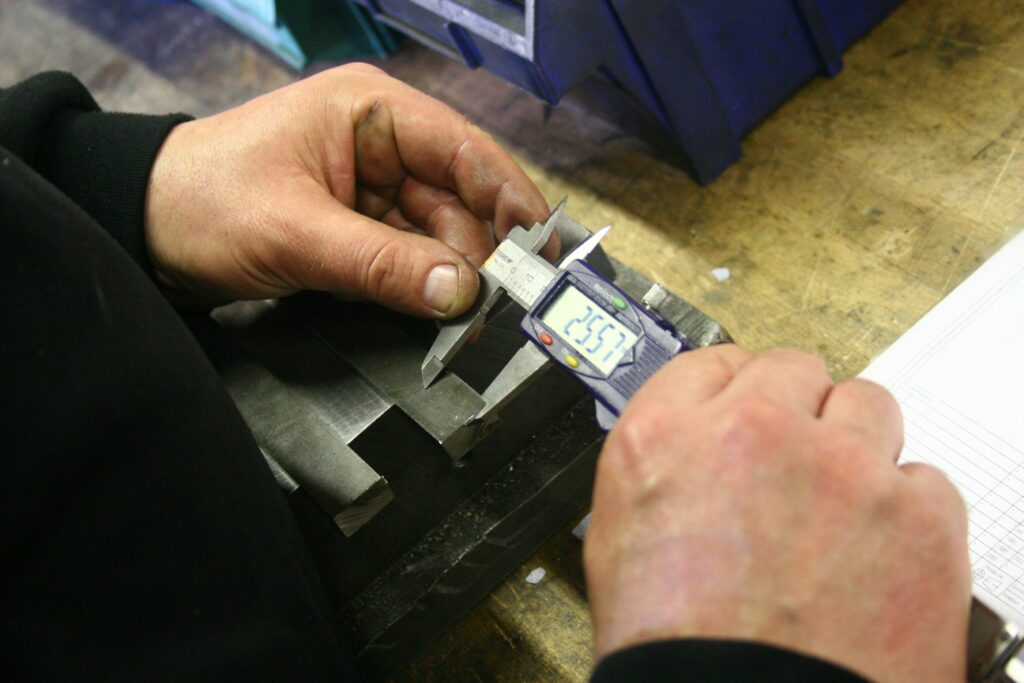
| CNC machining | Machined brass, steel, and aluminum inserts and fixtures, with tolerances to ±0.001″ through our vetted network | CNC machining |
| Sheet metal | Stamped and formed brackets and terminals used as inserts | Sheet metal fabrication |
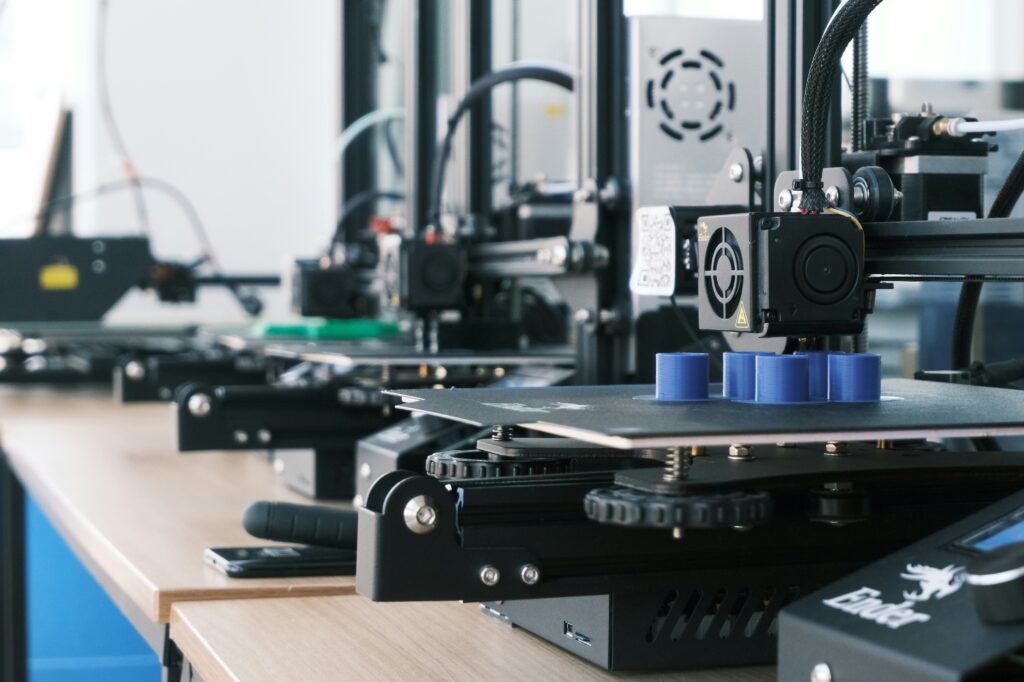
| 3D printing | Fit-check prototypes and pre-tooling design validation on FDM, SLA, SLS, PolyJet, and DMLS | Additive manufacturing |
| Finishing | Pad printing, silk screening, wet paint with color matching, and secondary operations | Finishing + post-processing |
| Engineering + DFM | File review for retention, wall thickness, and bond risk before tooling is cut | Engineering services + DFM |
| Wire + electromechanical | Cable assemblies, wire harnesses, and electromechanical builds for molded connectors and terminals | All services |
Sourcing insert molding and overmolding
Not every molder runs insert loading or multi-material work, and the ones that do are not always open. Quick-turn manufacturing portals price the geometry. They cannot tell you which molder has an aluminum tool slot open this month or has run your resin pair before. PE keeps a curated list of vetted molding shops and knows which run this work, which have press time, and which hold aluminum and steel tooling. Capability and capacity are different questions, and we cover why that gap matters in a separate article.
One project manager handles the RFQ, tooling, first shots, and delivery under ISO 9001:2015 quality management. Since 2016 we have served 1K+ customers and coordinated 30+ capabilities through a single point of contact. When the part also needs machined metal inserts, the same project manager coordinates CNC machining for those components, and sequences finishing after. For a closer look at how a human review differs from an automated one, read our piece on instant quotes vs engineered quotes. These processes show up regularly in industrial and automotive programs.
What customers say
Not only were these parts a day early, but the engineers here at the office passed them around this morning and admired how pretty they turned out. I checked their dimensions and everything was dead on spec. Keep sending us beautiful perfect parts early and we’ll keep sending you our business.
Adam N., Senior Mechanical Engineer
Anali O’Connell is the most reliable and fast representative I’ve ever worked with. She is a huge factor in why I keep going to PE for work. I know I can trust her quotes and lead times, and she works with me through the whole process.
Brian J., Procurement Manager
Insert molding and overmolding FAQ
Is overmolding the same as insert molding?
No. Insert molding places a preformed component, usually metal, in the mold so plastic forms around it. Overmolding molds a second material over a substrate that is already formed. Both run on injection molding equipment, and one part can use both.
Can you overmold onto a metal part?
Yes. The substrate can be metal. Plan for mechanical retention such as holes, channels, or undercuts, confirm the elastomer grade and any surface treatment, and test the bond before production.
Which costs more, insert molding or overmolding?
It depends on the part. Insert molding costs track the insert, loading time, and scrap risk. Overmolding costs track the second material, added tooling or multi-shot machine time, and tool complexity. Send the drawing and volume plan and we will quote both routes where both are viable.
Is a molded-in insert better than a heat-set or ultrasonic insert?
It depends on volume and load. At low volume a post-molding install is often the better price. As volume and torque or pullout requirements rise, molded-in inserts tend to pay back.
Send us your files
Send us your files and a real person will contact you within 24 hours. We flag insert retention and bond risks before tooling is cut.
Built Fast. Built Right.
Sources
- Teknor Apex, The Essential Guide to Overmolding Process and Materials
- HEXPOL TPE, TPE overmoulding guide
- PlasticsToday, Design and material advice from the pros, Part 3: Insert molding essentials
- Kaysun, Managing Hoop Stress and Key Challenges in Insert Injection Molding