
Manufacturing labor shortage: the sourcing risk hiding in your supply chain
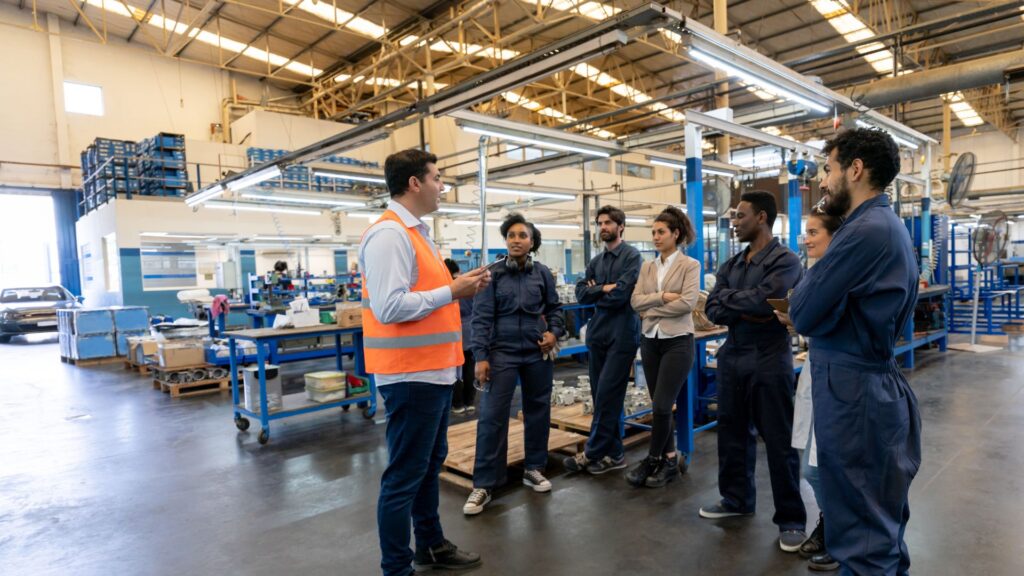
A manufacturing labor shortage doesn’t show up on your vendor’s website. It shows up as a quote that takes longer than it should, a lead time that quietly stretches, or a part that comes back with a defect a fully staffed inspection line would have caught. If you’re sourcing custom parts right now, that risk sits closer to your supply chain than most buyers realize.
The numbers behind the shortage
Three data points define where things actually stand in 2026:
- Vacancy rate: NAM’s Q1 2026 outlook put the average unfilled-role rate at 4.1 percent across manufacturers, with one in four shops running above 5 percent.
- Job openings: climbed from the 394,000–426,000 range in late 2025 to 440,000–510,000 in Q1 2026.
- Long-term outlook: Deloitte and The Manufacturing Institute’s workforce study puts the longer arc at up to 1.9 million manufacturing jobs unfilled by 2033.
The detail that matters most for a sourcing decision: Deloitte’s 2026 outlook ties this tightening labor pool directly to reshoring. Every program moving back onshore adds demand to a workforce already stretched before reshoring picked up. That’s not a coincidence buyers should ignore. It’s two pressures compounding on the same limited pool of skilled labor.
Why this shortage doesn’t fix itself with headcount alone
Most coverage of the labor shortage treats it as a numbers problem: not enough people to fill open roles. That’s true, but it undersells what’s actually leaving the floor. A significant share of the manufacturing workforce is nearing retirement, and the people aging out aren’t just leaving seats open. They’re the ones who can look at a setup and know it’s wrong before the first part comes off the machine, or quote a job accurately off instinct built from decades of similar ones.
That judgment doesn’t transfer with a headcount number. A shop can hire two junior machinists for every senior one who retires and still lose real capability, because the new hires haven’t built the pattern recognition yet. For a buyer, that means “fully staffed” doesn’t guarantee the same quality of work it did two years ago at the same shop. That’s why staffing alone isn’t the right question to ask a vendor. Who’s actually running the job matters as much as how many people are on the floor.
What a short-staffed vendor actually costs you
Vendors don’t advertise being short-staffed. Here’s how it actually shows up:
- A two-week run takes three. Fewer hands on the floor means slower throughput, not a canceled order.
- A shift running with a skeleton crew misses something on final inspection. Fewer people means less redundancy in the check that’s supposed to catch a defect before it ships.
- None of it shows up in a capacity chart or a quoted lead time. It shows up as a missed date on your program, after you’ve already committed.
We’ve seen this play out directly. A vendor running a lean second shift missed a tolerance on a batch of machined brackets, not from a process failure, but because the inspector who normally caught that kind of variance had been pulled to cover a different line. The parts still shipped on schedule. They just weren’t right, and the customer found out at final assembly instead of before the parts left the shop.
This is where sourcing model matters more than any single vendor’s reputation. A single-vendor relationship carries whatever staffing reality that one shop is dealing with this quarter, with no visibility into it from your side. A quick-turn manufacturing portal has even less. It matches your file to whoever bids fastest, with no read on whether the person behind that bid is actually staffed to deliver.
How a vetted manufacturing vendor network protects your timeline
A vetted vendor network exists specifically to close that visibility gap. What that looks like in practice:
- We talk to our shops directly, not through a portal queue, so we know who’s staffed to hit a date this month and who’s running lean.
- Capability and current capacity get tracked shop by shop across the network, not assumed from a bid.
- When a vendor’s staffing tightens, your job moves to one that isn’t stretched, instead of riding it out with a vendor who’s already behind.
That’s the difference between sourcing through a partner and sourcing through a queue. You get a single point of contact who’s already watching for risk, instead of finding out after your date has already slipped.
Common questions about the manufacturing labor shortage
Is the manufacturing labor shortage getting worse in 2026?
Job openings are trending up, not down. NAM’s Q1 2026 data shows openings rose from the 394K–426K range in late 2025 to 440K–510K in Q1 2026, with vacancy rates holding at elevated levels.
How does reshoring affect the labor shortage?
Deloitte’s 2026 outlook connects the two directly. Work moving back onshore adds demand onto a skilled labor pool already tight before reshoring accelerated.
How do I know if my vendor is actually staffed to hit my date?
Ask about staffing on the specific shift and process running your part, not total headcount. A vetted network with direct vendor relationships can answer that before you commit, because that’s part of how vendors get and stay on the list.
ISO 9001:2015. AS9100 Compliant. ITAR Registered.
You shouldn’t find out a vendor is short-staffed after your date slips. Send us your files.