Sheet metal fabrication turns flat stock into enclosures, brackets, chassis, panels, and covers through a sequence of cutting, forming, joining, and finishing steps. Each step happens in a set order, often on different equipment, and sometimes at different companies. Most of the cost and lead time in a sheet metal part comes from how many of those steps it needs and how tightly the drawing controls each one.
This guide walks through the sheet metal fabrication process step by step, with the tolerances and design rules that matter at each stage.
Step 1: Cutting the flat blank
Every formed part starts as a flat pattern, the unfolded shape of the finished part. CAD software calculates it using a bend allowance or K-factor so the flanges come out the right length after bending.
Shops cut flat blanks three main ways:
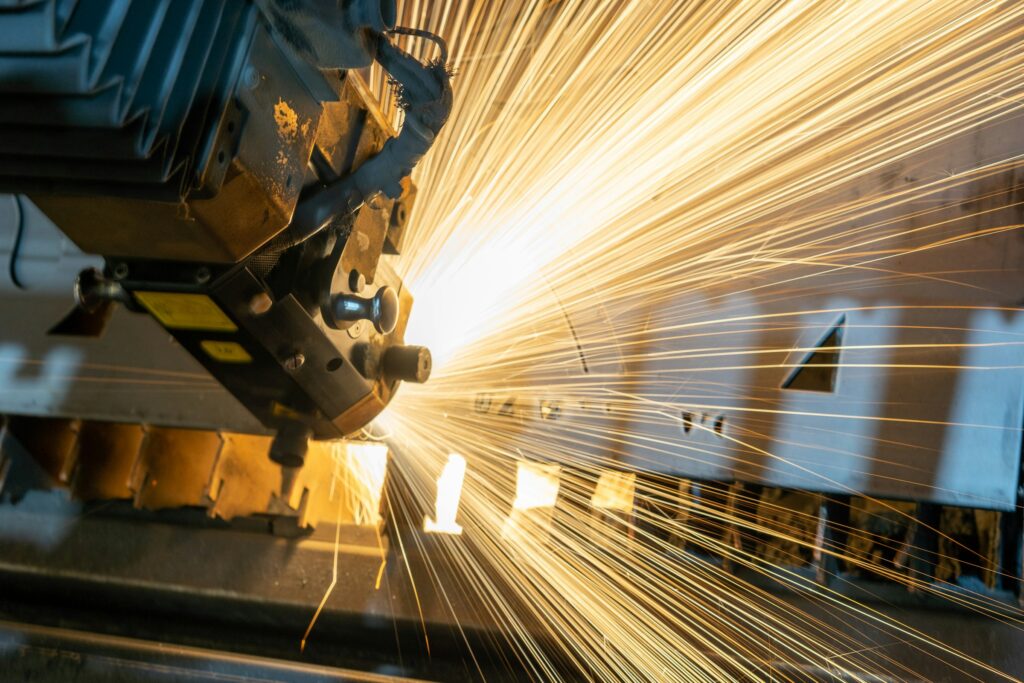
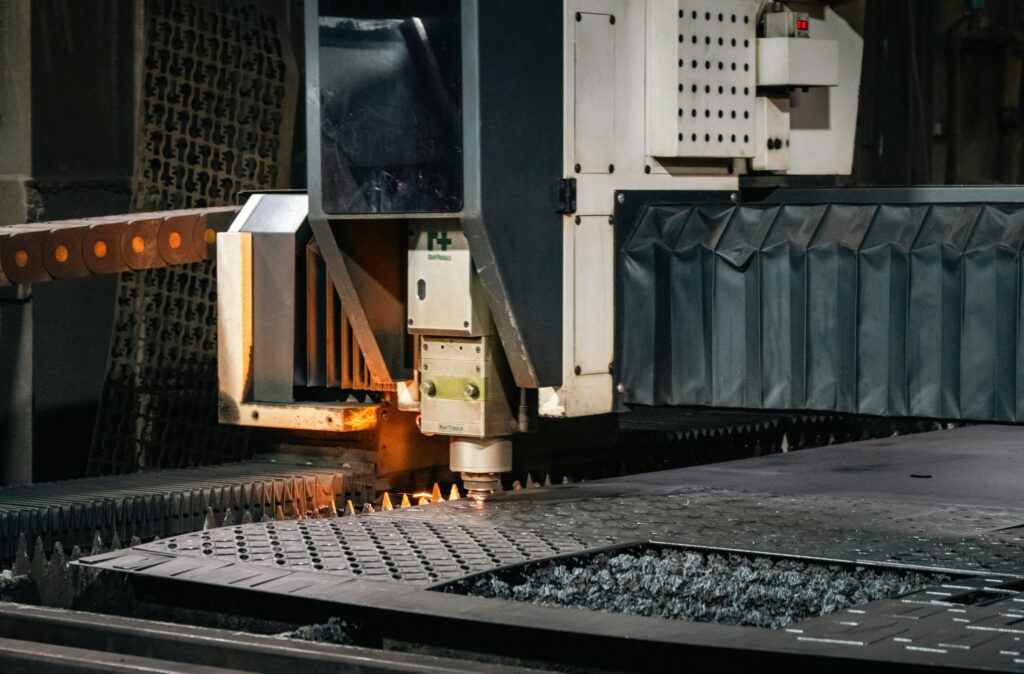
- Laser cutting handles most work today. Fiber lasers cut complex profiles quickly with no tooling and hold about ±0.005″ on thin sheet.
- Turret punching uses standard and custom punch tools. It’s fast for parts with many repeated holes and can form features like louvers, dimples, and extrusions in the same setup.
- Waterjet and shearing cover thick plate, heat-sensitive materials, and simple rectangular blanks.
Step 2: Forming
Most forming happens on a press brake, where a punch presses the sheet into a die to make a bend. A few rules decide whether a part can be formed cleanly:
- Flange length: a common minimum is about four times the material thickness, so the die has enough metal to grip.
- Bend radius: use a consistent inside radius across the part so one tool can form every bend. The minimum radius depends on the material and temper. Some hard aluminum tempers crack at tight radii.
- Features near bends: holes and slots too close to a bend line stretch out of shape. A common rule is to keep holes at least 2.5 times the thickness plus the bend radius from the bend.
- Bend relief: where a bend ends at an edge, a relief notch at least as wide as the material thickness keeps the corner from tearing.
Press brake bends typically hold about ±1° on angle. Tolerances also stack up across bends: a dimension across three or more bends on thin sheet is typically held to around ±0.030″, compared with about ±0.005″ between two cut edges on the same flat surface. Put tight tolerances on features that sit on the same face where you can.
Other forming methods include rolling for cylinders and curved panels, and stamping in progressive dies when volumes justify hard tooling.
Step 3: Joining and hardware
Formed parts are often joined into assemblies:
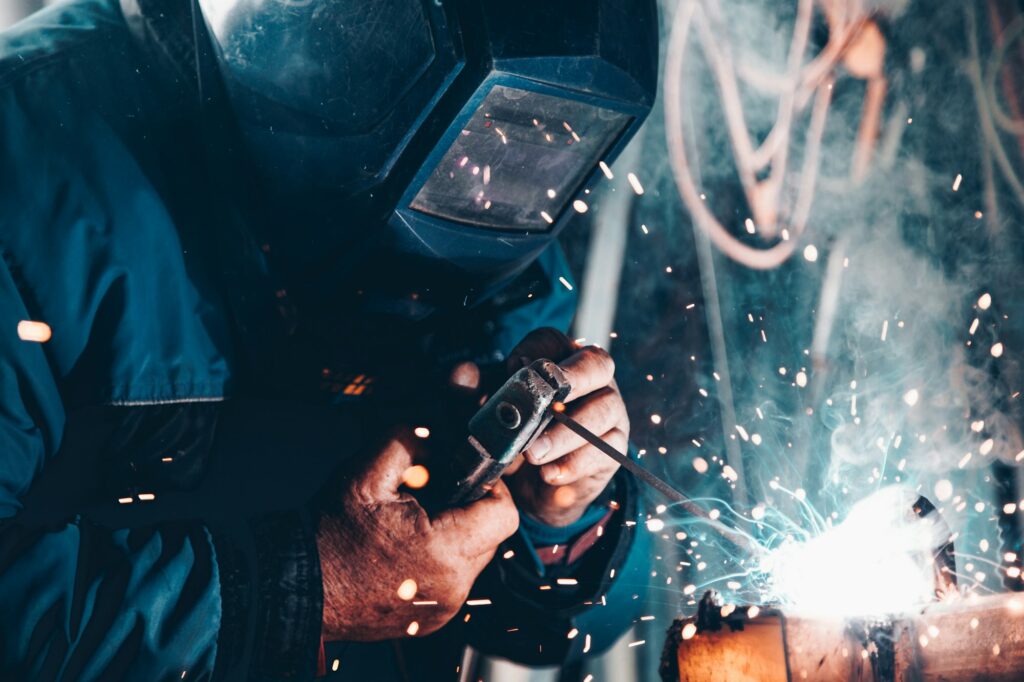
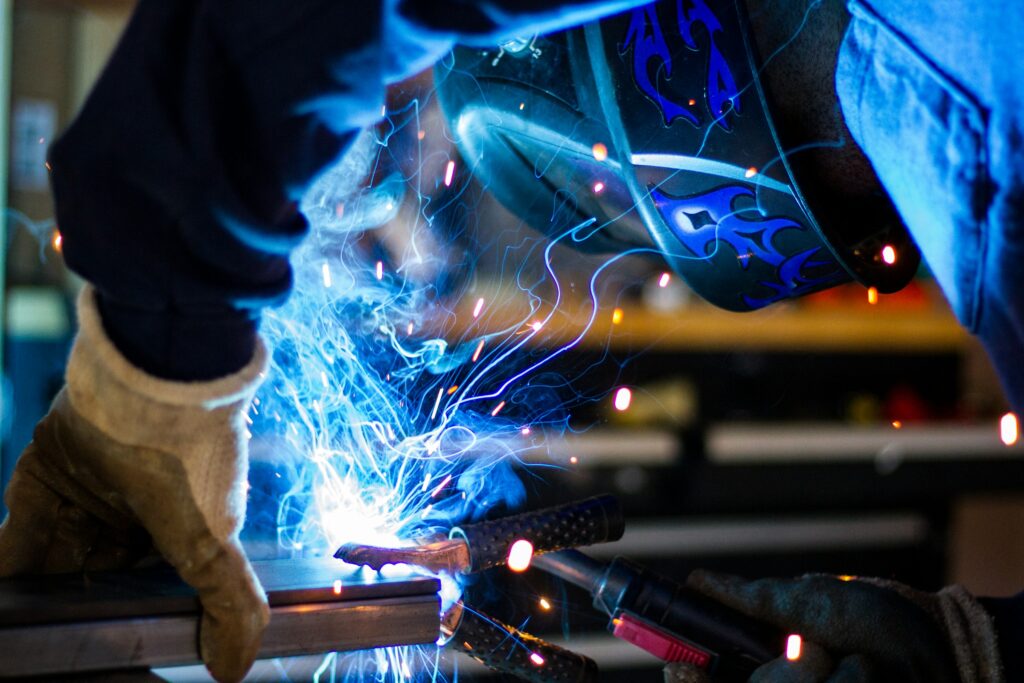
- Welding (MIG, TIG, or spot) joins seams and corners. Weld callouts belong on the drawing with standard weld symbols. Welding adds heat distortion, so critical features near welds may need post-weld machining or fixturing.
- Self-clinching hardware such as PEM nuts, studs, and standoffs gets pressed into the sheet to add threads to thin material. Keep hardware at least three times the material thickness from a bend line, and follow the hardware maker’s edge distance.
- Rivets and fasteners join parts that need to come apart or can’t be welded.
Step 4: Finishing
Finishing protects the part and sets its appearance. Common options include powder coating, wet paint, anodizing for aluminum, zinc or nickel plating for steel, and passivation for stainless. The drawing should specify finish type, thickness or class, color, and any masking for grounding points or threaded holes. Hardware installed in masked areas usually goes in after finishing. Our finishing and post-processing page lists what’s available through our network.
Step 5: Inspection
Sheet metal parts are checked for flat-pattern features, bend angles, formed dimensions, hardware installation, weld quality, and finish. Inspection after finishing matters most for powder-coated parts, where coating thickness can affect fit on tight slots and mating edges.
Where cost and lead time hide
| Cost driver | Why it adds cost | What helps |
|---|---|---|
| Many bends or mixed bend radii | More press brake setups and tool changes | One inside radius throughout; group bends |
| Tight tolerances across bends | Slower forming, more inspection, more scrap | Locate critical features on one face |
| Welded assemblies | Fixturing, welding labor, distortion control | Tabs and slots, hardware, or fewer welds |
| Hardware near bends | Distortion or hardware installed out of sequence | Keep hardware 3x thickness from bends |
| Multiple outside vendors | Shipping and scheduling between steps | One coordinator owning every handoff |
That last row is where many sheet metal jobs slip. A part that’s laser cut and formed at one shop, welded at a second, and powder coated at a third has three schedules to coordinate. We wrote about this in Where Multi-Process Builds Actually Go Wrong.
How PE sources sheet metal fabrication
PE’s sheet metal fabrication network covers laser cutting, punching, press brake forming, welding, hardware installation, and finishing. Our engineering team reviews flat patterns, bend sequences, and tolerances before quoting, and one project manager coordinates every step, including outside finishing. We support industrial automation enclosures, advanced energy hardware, and aerospace and defense brackets, and every part is inspected in San Clemente before it ships. For design rules in more depth, see our sheet metal design guide.
Frequently asked questions
Cutting the flat blank (laser, punch, or waterjet), forming it on a press brake or other equipment, joining with welds or hardware, finishing with coating or plating, and inspection.
Cut features on the same flat surface typically hold about ±0.005″ on thin sheet. Bend angles hold about ±1°, and dimensions across several bends need looser tolerances, often ±0.015″ to ±0.030″ or more depending on thickness and bend count.
A common guideline is at least 2.5 times the material thickness plus the inside bend radius, measured from the bend. Closer holes tend to stretch into ovals during forming.
Send us the drawings.
A real person will contact you within 24 hours.