Fillet vs. Chamfer: When to Use Each in CNC Design
Every internal or external corner on a CNC-machined part needs a decision: fillet or chamfer. It looks like a cosmetic choice. It isn’t. The fillet vs. chamfer decision affects machining time, tool selection, stress performance, and how the part mates with whatever it bolts, presses, or slides into. Get it wrong and you’re either paying for a feature your part doesn’t need or leaving a stress riser in a spot that’s going to crack under load. Here’s how to actually make the call.
What Each One Is
A chamfer is a flat, angled cut across an edge, usually 45 degrees though not always. A fillet is a rounded, radiused transition between two surfaces. Visually they look similar at a glance. Mechanically and machining-wise, they’re different features entirely.
Machining Time and Tooling
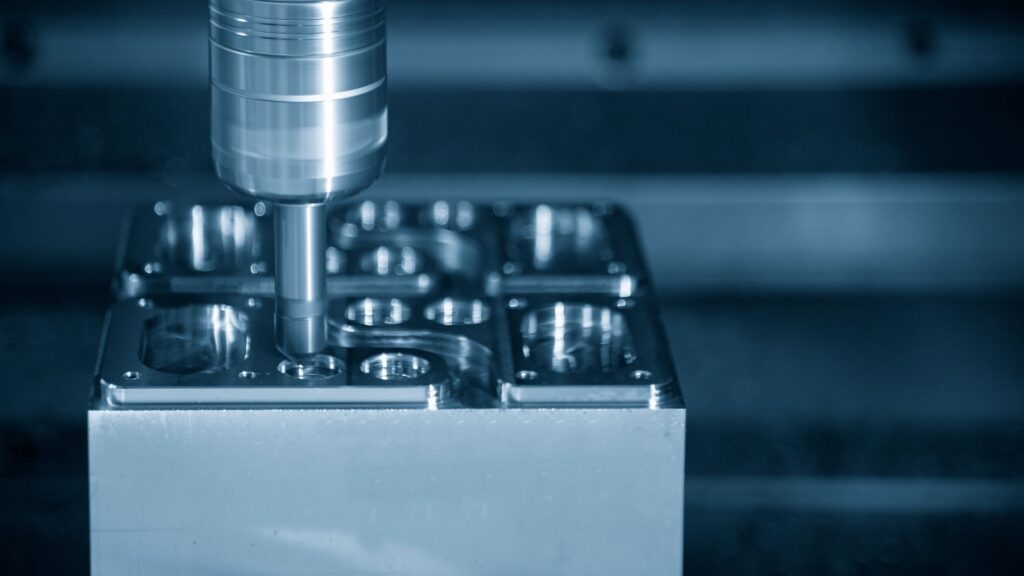
Chamfers are typically the faster, cheaper feature to cut. A single-point chamfer tool or the cutter’s own lead angle can knock one out in a single pass on most CNC machines. Fillets, especially internal ones, need a ball-nose or corner-radius tool matched to the exact radius specified, and internal fillets are limited by the smallest tool that can physically reach into the corner. Specify a tighter internal radius than the smallest practical tool allows and the vendor network we work with will flag it before it ever gets cut, because it usually means a redesign, not a workaround.
Stress and Fatigue Performance
This is where the decision stops being about cost. A sharp internal corner concentrates stress. A chamfer reduces that corner to two sharp transitions instead of one, which doesn’t solve the problem. A fillet spreads the load across a smooth radius, which is why fatigue-loaded parts, brackets, structural components, anything that sees repeated load cycles, almost always call for a fillet at internal corners instead of a chamfer. If your part is going to see vibration or cyclic loading, this is not a place to default to whatever’s faster to draw.
Assembly and Function
Chamfers earn their keep on mating features. A chamfered edge on a shaft, a hole, or a fastener location makes assembly easier, guides parts into alignment, and removes the sharp edge that would otherwise catch on an O-ring or a gasket during insertion. Fillets don’t do this job as well. Their rounded profile doesn’t provide the same lead-in geometry a chamfer does.
The Practical Rule
Default to chamfers for edges that need to deburr cleanly, ease assembly, or simply don’t carry significant load. Default to fillets for internal corners on load-bearing or fatigue-sensitive features, and check your fillet radius against realistic tooling before it goes out for quote. When you’re not sure which one your part needs, that’s exactly the kind of question worth asking before the design gets locked, not after the first article comes back.
Send us the drawings and our team will flag any edge treatment that’s going to cause a problem in the shop before it costs you a re-quote.