Most sheet metal fabricators can cut and bend a simple bracket. The differences show up on parts with tight hole patterns across bends, welded assemblies, cosmetic finishes, or documentation requirements. We vet fabrication shops for our network every month, and these are the seven questions that tell us the most about whether a shop fits a given part.
1. What equipment will run my part?
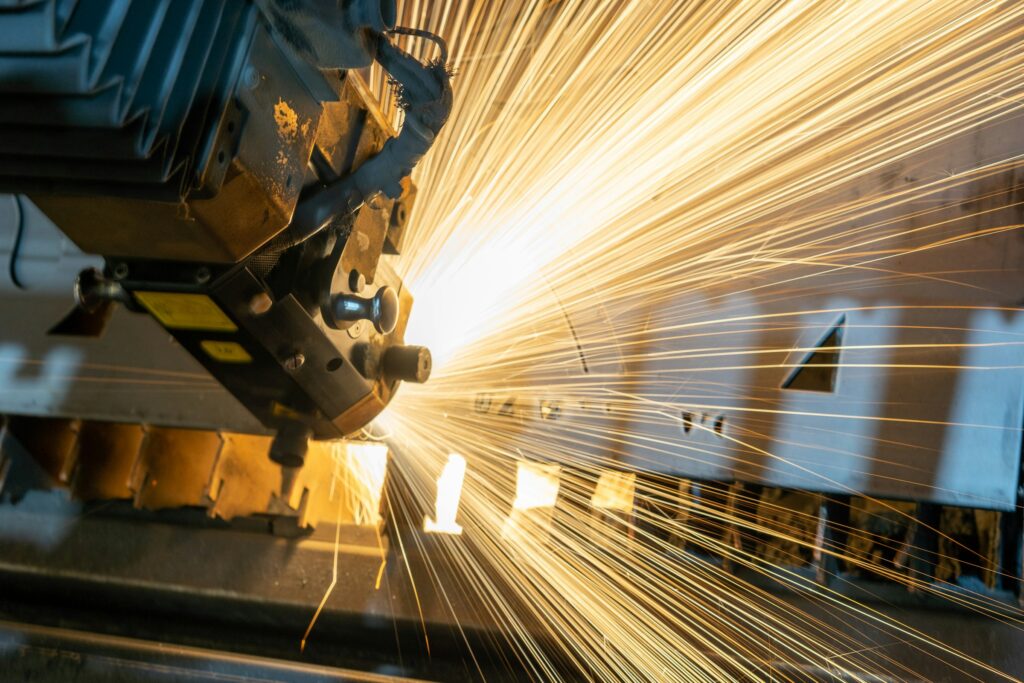
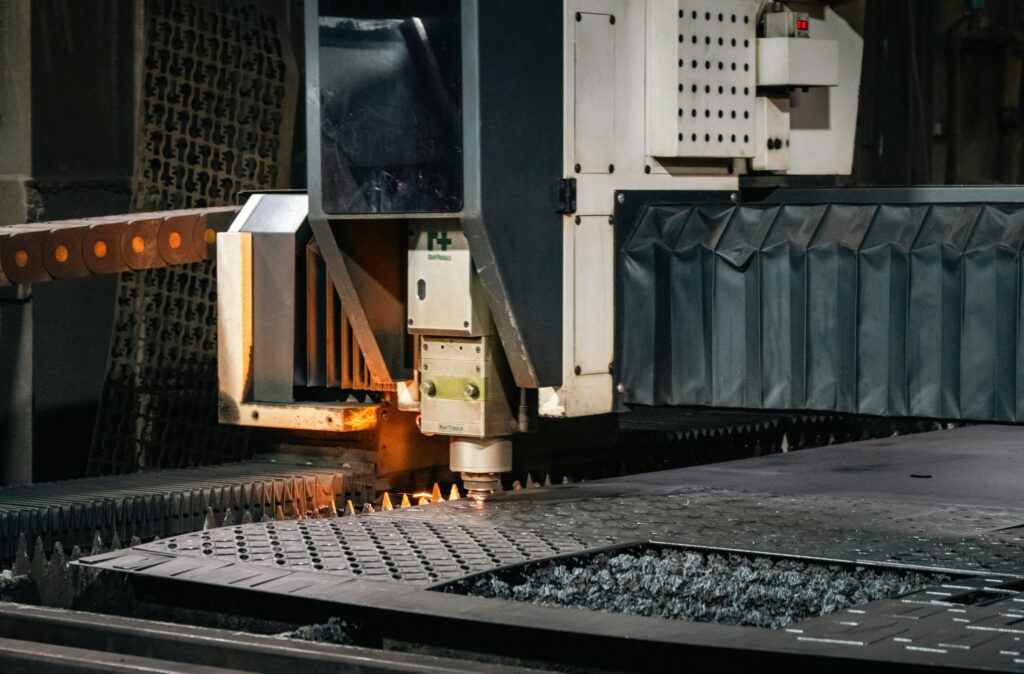
Ask for the specific machines, not a general capability list. For cutting, that means laser type and power, bed size, and whether there’s a turret punch for forming louvers or embosses. For forming, ask about press brake tonnage, bed length, and whether the brakes have angle measurement or automatic backgauges. Higher-power fiber lasers cut thicker plate and long parts need long brakes. A shop that can name the machine for your part has already looked at it.
2. What tolerances do you hold, and where?
Sheet metal tolerances depend on where a feature sits. Features cut on the same flat surface typically hold about ±0.005″ on thin sheet. Bend angles hold about ±1°. Dimensions across bends stack up, so a dimension across three or more bends on thin stock is often held to around ±0.030″. Ask the fabricator for its standard tolerance table and compare it with your drawing before you place the order. If your critical features span several bends, ask how they’ll be held and checked.
3. Who builds the flat pattern?
The flat pattern decides whether flanges come out the right length. Some shops use your flat pattern as supplied. Others rebuild it from your 3D model using their own bend allowances for their tooling, which is usually more accurate. Ask which they do, and whether they’ll send the flat pattern for review on a new part.
4. What welding and hardware work happens in-house?
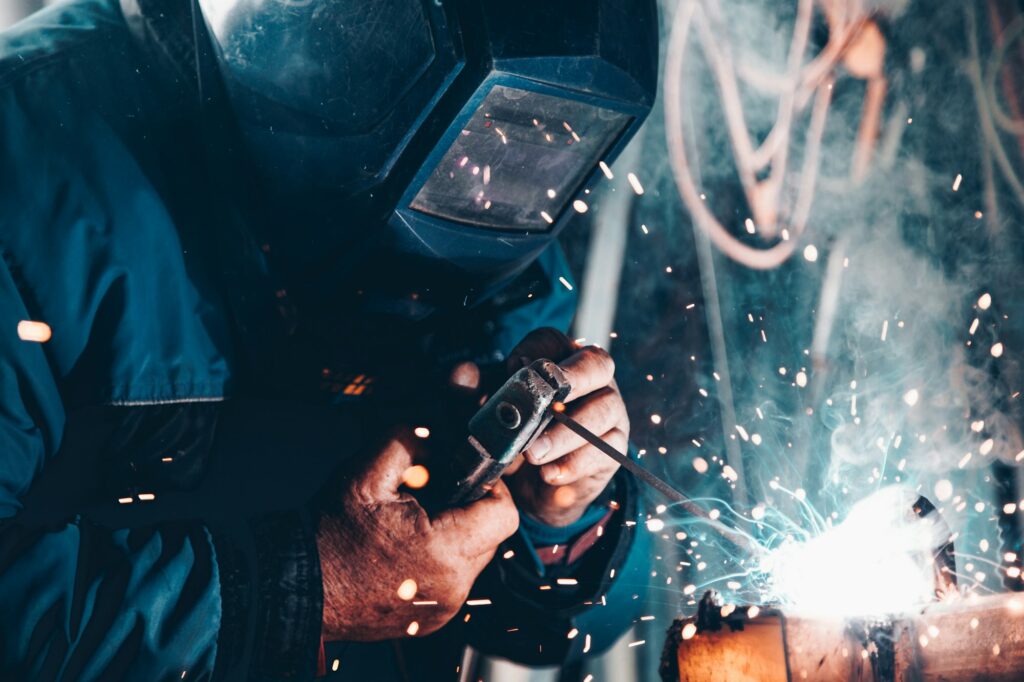
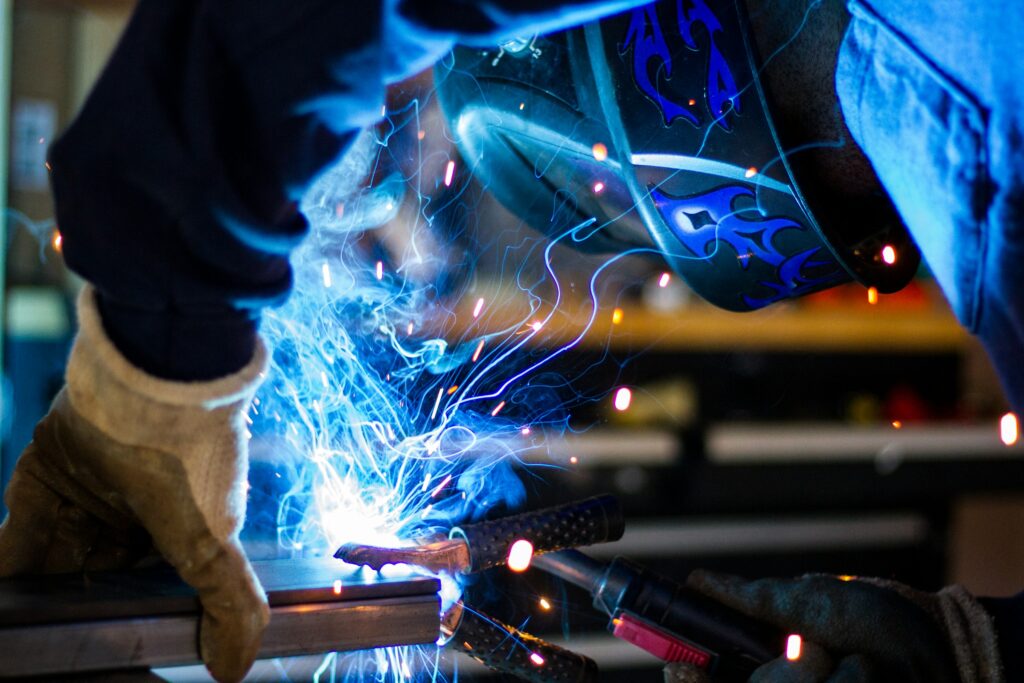
For welded assemblies, ask which processes the shop runs (MIG, TIG, spot) and what certifications its welders hold. AWS D1.1 covers structural steel, D1.2 aluminum, D1.6 stainless, and AWS D17.1 covers fusion welding for aerospace applications. Ask how the shop controls heat distortion on thin parts. For self-clinching hardware like PEM nuts and studs, ask whether installation is done with a press and how pull-out or push-out strength is verified.
5. Is finishing in-house or outsourced?
Powder coat, paint, plating, and anodize are often subcontracted. That’s not a problem by itself, but it adds handoffs. Ask who the finisher is, whether they’re approved by the fabricator, how masking callouts get communicated, and whether parts are inspected after finishing. Coating thickness can affect fit on tight slots and tabs. Our finishing and post-processing page lists common options.
6. How do you inspect, and what documentation comes with the parts?
Ask what equipment the shop uses to inspect formed parts and whether it does first article inspection on new parts. Ask what ships with the order: material certs, a first article report, a certificate of conformance, finish certs. For regulated programs, ask whether its quality system is certified or compliant to ISO 9001 or AS9100.
7. What’s your real capacity right now?
Lead time on a quote reflects the shop’s current backlog, not its equipment list. Ask how full the brakes and welders are, how rush jobs are handled, and what happens to your order when a bigger customer calls. A shop that answers honestly about a crowded schedule is easier to plan around than one that commits to every date.
Red flags when vetting sheet metal fabricators
- No standard tolerance table, or tolerances that don’t change across bends
- Vague answers about who does finishing
- No first article process for new parts
- Welders without current certifications for welded structural or aerospace parts
- Lead times that don’t change regardless of quantity or season
For a broader checklist that applies to any supplier, see What to Look for in a Contract Manufacturer.
How PE vets sheet metal fabricators
Every fabricator in PE’s vendor network is reviewed for equipment, tolerances, welding and hardware capability, finishing partners, and capacity before it receives a drawing. Approval is scoped to the work the shop has proven. When your sheet metal fabrication job comes in, we place it with the fabricator that fits the part and has room on the schedule, coordinate outside finishing, and inspect the parts in San Clemente before they ship. We support advanced energy, industrial, aerospace, and defense programs. For design rules, see our sheet metal design guide.
Frequently asked questions
Compare equipment, tolerance capability across bends, flat-pattern practice, welding certifications, finishing arrangements, inspection and documentation, and current capacity. Ask for specifics rather than general capability claims.
It depends on the part. AWS D1.1 covers structural steel, D1.2 aluminum, D1.6 stainless, and AWS D17.1 covers aerospace fusion welding. Your drawing or customer spec should state which applies.
About ±0.005″ on cut features on the same surface of thin sheet, about ±1° on bend angles, and looser tolerances on dimensions across multiple bends, often ±0.015″ to ±0.030″.
Send us the drawings.
A real person will contact you within 24 hours.