A year ago, the Secretary of Defense promised to put acquisition on a wartime footing built around speed and volume. Whatever you think of the rhetoric, the money and the programs followed. The 2026 National Defense Strategy made rebuilding the industrial base a central priority and opened more doors to nontraditional companies. A CSIS study this summer found the base is improving, with the most striking change being the number of new companies entering defense.
Those new companies build drones, munitions, autonomy and counter-UAS systems. Many of them are moving from prototype to rate production in months rather than years. That pace runs straight through their supply chain.
The drone program shows where this is headed
The Pentagon’s Drone Dominance effort targets about 30,000 drones now and 150,000 by 2028, according to The Cipher Brief. A revised supply chain framework released in July sets the end goal as a wholly domestic small-drone supply chain. The Office of Strategic Capital has committed up to $820 million in conditional loans to one drone component maker alone, and private builders are pledging billions in new U.S. capacity.
The constraint is parts. NDAA-compliant components are in short supply, and price caps on attritable systems leave little room for expensive sourcing mistakes.
What changes when a program goes to rate
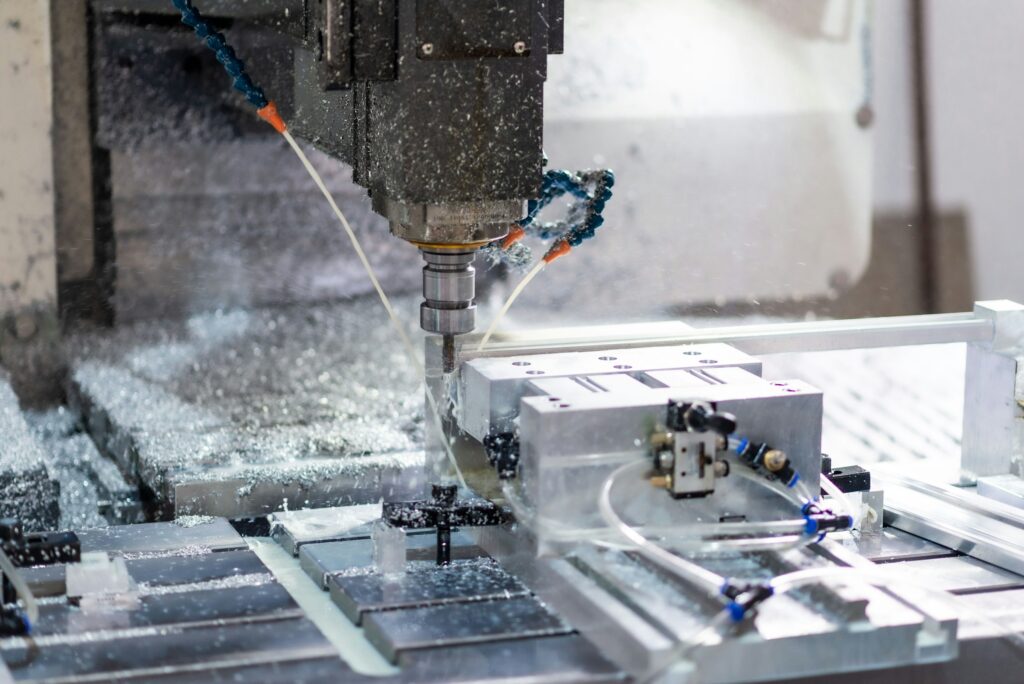
At prototype quantities, almost any capable shop can make a part. At rate, three things start to matter more than unit price:
- Traceability. Domestic sourcing rules mean you need material certs and country of origin for the bar stock, not just the finished part.
- Repeatability. A first article inspection report to AS9102 proves a process, not a part. Rate production depends on the process holding at quantity 1,000.
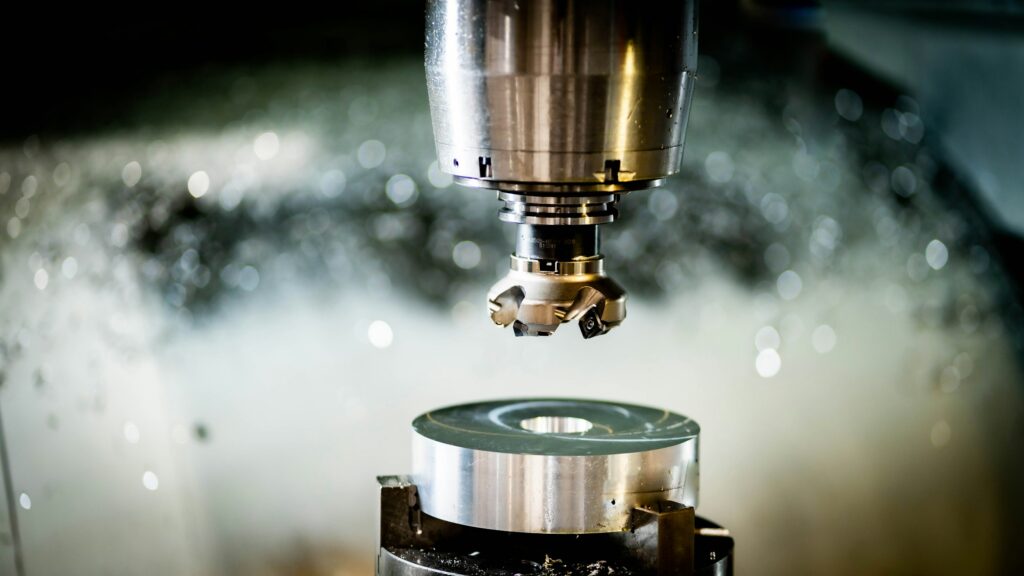
- Scalable capacity. The shop that turned 10 prototypes in a week may not have the spindles for 2,000 a month.
Five things to lock down before rate
- Run DFM on high-volume parts while the design can still change. A $40 machined part that could be a $9 sheet metal part matters a lot at 150,000 units.
- Flag which parts carry domestic content requirements and tell suppliers before they quote.
- Ask for material certifications and traceability as a standard deliverable, not an afterthought.
- Agree on the FAI format and inspection plan with the supplier before the first production release.
- Qualify a second source on critical parts before you need it.
What “domestic” means for your BOM
Drone supply chain rules started with the obvious components: motors, flight controllers, batteries and radios. The government keeps a Blue UAS list of whole drones and a framework of approved component suppliers, and both are growing as programs tighten sourcing rules.
Structural and machined parts get less attention, but they are part of the BOM too. A housing, a motor mount or a payload bracket made from imported bar stock, or machined offshore, can create the same problem as an imported flight controller once the requirement reaches it. The practical step is simple: add a country-of-origin column to your BOM now, covering raw material and where each part is processed, before a contracting officer asks for it.
Prototype shop or production partner?
The shop that got you through your first flight test may not be the right shop for rate. Neither is wrong. They are built for different jobs.
| Prototype | Rate production | |
|---|---|---|
| What matters most | Speed and flexibility | Repeatability and cost at volume |
| Documentation | Basic inspection | Material certs, traceability, FAI, process control |
| Quoting | Per job | Pricing by volume and release schedule |
| Capacity | A few machines | Enough spindles and people to hold delivery dates for months |
| Design changes | Expected and welcome | Controlled through revisions |
The handoff between those two columns is where schedules slip. Teams that bring their production partner in before design freeze avoid redoing DFM on parts that are already qualified.
Where we come in
Precision Expedited takes complex hardware from prototype through production for defense and aerospace teams, including UAS and counter-UAS programs. We are AS9100D Compliant, ITAR Registered and NIST 800-171 Compliant, and we coordinate a vetted network that can scale a part from a handful of prototypes to production volumes without changing your point of contact. Our engineering and DFM support starts before design freeze.
Washington set the pace. Whether programs hit it will be decided on shop floors, one part at a time.
Frequently asked questions
AS9102 is the aerospace standard for documenting a first article. It records part number accountability, raw material and special processes, and a measured result for every characteristic on the drawing. Many defense programs require it before production starts.
Some are and some aren’t. It depends on the system and how the part is classified, so confirm with your export compliance team before you send drawings out for quote.
Before design freeze. DFM changes are cheap on a model and expensive once parts are qualified and in the field.
Inspection and documentation requirements vary by program, so we set them up with each customer at the start rather than offering one standard package. See our certifications and compliance page for details.
Send us the drawings.
A real person will contact you within 24 hours.