Every manufacturing survey this year lands in the same place. In CADDi’s 2026 Manufacturing Outlook Study, run with SME, 79% of manufacturing leaders named the skilled labor shortage as a major challenge, up from 72% a year earlier. 71% said it is already hurting their ability to hit production goals.
The longer view is harder. Manufacturing Institute and Deloitte projections cited by MISUMI put the industry’s need at 3.8 million additional workers by 2033, with retirements driving most of the openings. The defense industry alone has more than 800,000 openings today, according to the Pentagon’s top industrial base official.
Most coverage treats this as an HR story. For the engineers and buyers who send out RFQs, it is a lead time story.
Where you actually feel it
A shortage of machinists doesn’t announce itself. It shows up as small frictions that add weeks:
- Slower quotes. The person who quotes is often the same person who programs. When they are short-handed, your RFQ waits behind the work already on the floor.
- Shorter quote validity. Shops that can’t predict their own staffing hedge by holding prices for days instead of weeks.
- No-quotes on fussy parts. Tight tolerances everywhere, unclear callouts and one-off quantities get passed over first.
- Lead times that move after the PO. One experienced setup machinist leaving can push every job behind them.
- Inspection backlogs. First article inspection needs skilled people too, and that is where a part can sit finished but unshipped.
What you can control from your side of the RFQ
Shops are answering the shortage with automation; 69% plan to invest in robots and equipment this year. Buyers have levers too, and most of them cost nothing:
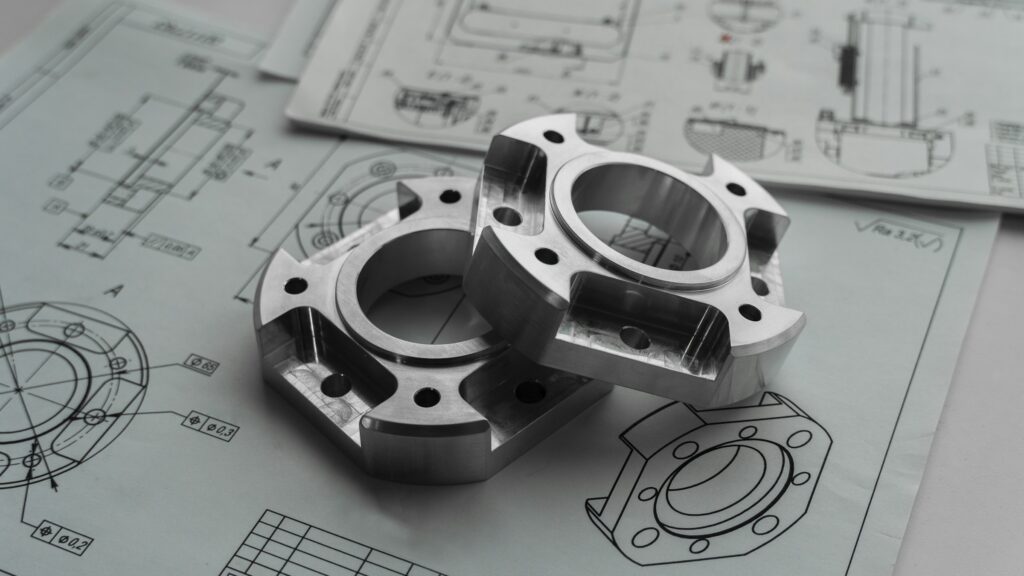
- Send a complete package. A 3D model plus a 2D drawing with material, finish and quantity lets a shop quote without a back-and-forth.
- Reserve tight tolerances for features that need them. A blanket ±0.001″ across a part forces slower setups and more inspection than the function requires.
- Batch where you can. One release of 200 beats four releases of 50 for a short-staffed shop.
- Give a forecast. Even a rough six-month look helps a shop staff for your work instead of fitting it in.
- Have an overflow plan. The time to find a second source is before your primary shop loses its lead programmer.
What a complete RFQ package looks like
The fastest quotes go to packages a shop can price without picking up the phone. Before you send, check that yours includes:
- 3D model (STEP) and a 2D drawing at the same revision
- Material with grade and spec, not just “aluminum” or “stainless”
- Finish, coating or plating spec
- Quantities and any release breaks you expect
- Critical features called out, so the shop knows where tolerance matters
- Certs and inspection requirements stated up front
- Required delivery date, and whether it is firm
- ITAR or CUI flags, if the drawing carries either
A package missing two of those items isn’t rejected. It goes to the bottom of the pile while someone waits for answers. Our DFM guides cover the drawing details that speed up quoting.
Where tolerance eats shop time
Tight tolerances cost more than the extra machining pass. They mean slower feeds, more frequent tool changes, more in-process checks and more time on the CMM at the end. When the default tolerance in a title block applies to every dimension on the part, a shop has to treat a non-functional chamfer with the same care as a bearing bore.
The fix is usually a conversation with the design engineer. Loosen the title-block default, call out the handful of features that really drive fit and function, and the same part becomes faster to quote, faster to make and easier for a short-staffed shop to say yes to. Our engineering and DFM team can help with that review.
Why automation won’t fix it for everyone
Shops are buying robots, probing and lights-out cells, and it helps. Automation pays off most on repeat production, where the setup is proven and the part runs again and again. Prototypes, one-offs and low-volume complex parts still need an experienced machinist to program, set up and prove out the first piece. If most of your work looks like that, the labor shortage will keep reaching you no matter how many robots your suppliers install.
How we handle it
Precision Expedited spreads work across a vetted network of shops instead of one floor and one crew. We look at the whole picture, from capacity and capability to schedule, and find a shop with room to run your job. If a shop is short-handed, your job goes to one that isn’t, and you keep one point of contact and one PO. Our team responds to RFQs within 24 hours, whether the part is CNC machined, sheet metal or molded.
The labor gap won’t close soon. The buyers who plan around it will get their parts first.
Frequently asked questions
At many shops the person who quotes is also the person who programs and sets up jobs. When they are short-handed, quoting waits until the floor is covered.
It is a second source that can absorb work when your primary shop is full or short-staffed. The best time to set it up is before you need it, so the overflow partner already has your drawings, specs and quality requirements.
The long-term projections say no. Manufacturing Institute and Deloitte estimate the industry will need 3.8 million more workers by 2033, with retirements driving most openings.
Our team responds within 24 hours, and we route the job to a shop in our network that has the capacity to run it.
Send us the drawings.
A real person will contact you within 24 hours.