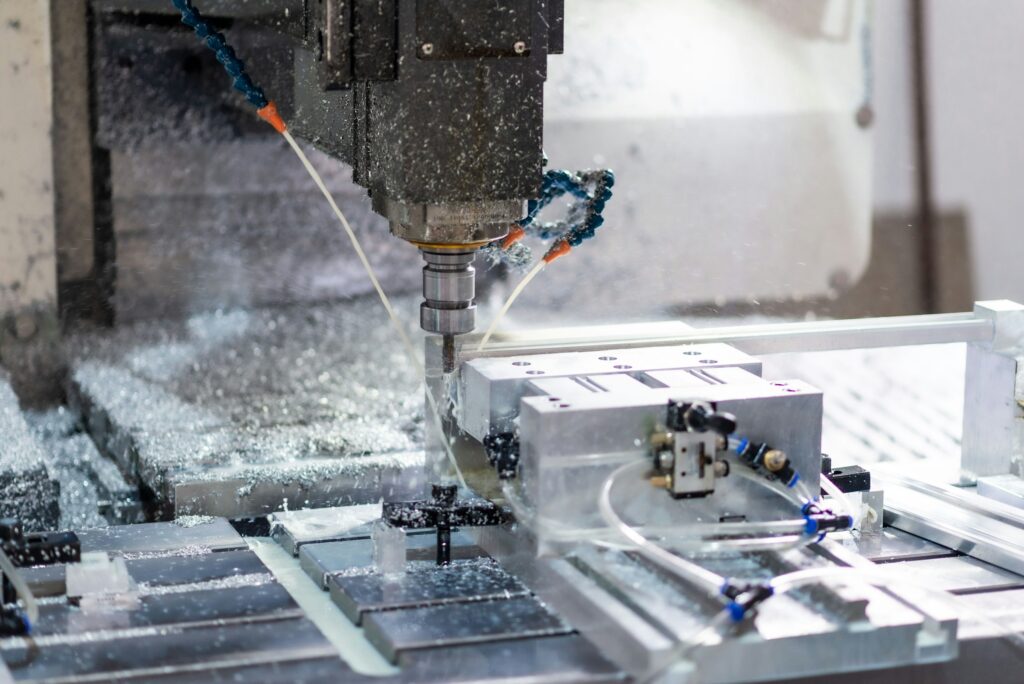
Prototype machining is how many engineering teams get functional parts into their hands fast: real metal or engineering plastic, real tolerances, and properties that match the production part. Speed depends less on the spindle and more on what happens before the job reaches the machine. Here’s when CNC is the right prototype process, what controls turnaround, and how to set up a prototype order so the path to production stays short.
When prototype machining beats other methods
3D printing is often the first idea for prototypes, and it’s a good one for form studies and complex shapes. CNC prototype machining wins when the prototype has to behave like the real part:
- Production material: machined prototypes are cut from the same 6061 aluminum, 17-4 stainless, titanium, PEEK, or acetal the production part will use, with the same mechanical properties.
- Consistent strength in every direction: machined parts come from solid stock, so they don’t have the layer-to-layer weakness of many printed parts.
- Tight tolerances and real threads: CNC holds about ±0.005″ as standard and tighter on critical features, with tapped threads and finished bores ready for assembly.
- Testing that counts: fit checks, load tests, thermal tests, and early qualification work give data you can trust when the prototype matches production material and process.
Printing still makes sense for very complex internal geometry, early form studies, and parts that would need many machining setups. Many teams print first, then machine once the design settles.
What actually controls turnaround
Spindle time on a prototype is often a few hours or less. The calendar days go elsewhere:
- Drawing questions. Missing tolerances, unclear datums, or conflicting notes stall a job until someone answers them. Clear drawings move fastest.
- Material. Common alloys in common sizes are usually on the shelf. Specialty alloys, large plate, or certified material may add days.
- Programming and fixturing. Each new part needs a CAM program and a way to hold it. Parts that need many setups take longer.
- Finishing. Anodize, plating, and heat treat run on outside vendors’ schedules, often adding several days.
- Inspection. First-piece measurement and any formal reports take time, and they’re worth it on parts going into test.
We broke this down step by step in The Real Timeline Behind Quick-Turn Manufacturing.
How to get machined prototypes faster
- Send a STEP file and a PDF drawing together. The model drives programming. The drawing carries tolerances, threads, and finish.
- Loosen what doesn’t matter. Put tight tolerances only on mating and functional features.
- Choose available materials. If 6061-T6 works for the prototype, it will usually ship faster than 7075 in an odd size.
- Skip finishes you don’t need yet. A prototype for a fit check may not need anodize. A prototype for corrosion testing does.
- Design for fewer setups. Features reachable from one or two sides machine faster.
- Order a few extra. Unit cost drops sharply from one part to five, and spares protect your test schedule if one gets damaged.
Prototype with production in mind
The fastest prototype isn’t much help if the design has to be reworked for production. Ask early whether the part will stay machined at volume or move to casting, molding, or sheet metal. If it’s moving to injection molding, for example, a machined prototype should still respect wall thickness and draft where possible so test results carry over. Our post on Prototype to Production: When to Make the Switch covers that decision.
Prototype machining is especially common in medical device development, where design iterations move quickly and test parts need production-equivalent materials, and in aerospace programs, where prototypes often feed into qualification.
How PE runs prototype machining
PE’s CNC machining network handles one-off prototypes through production runs. Our engineering team reviews each drawing before it goes out and resolves questions up front, so jobs don’t stall at the machine. We place work with shops that have open capacity, the right material on hand, and in-house or nearby finishing. Every prototype is inspected in San Clemente before it ships, and the same project manager can carry the part into production.
Frequently asked questions
Prototype machining is the use of CNC milling and turning to make low-quantity functional parts from production materials, so engineers can test fit, function, and performance before committing to production.
CNC is better when the prototype needs production material, tight tolerances, or consistent strength. 3D printing is better for complex internal shapes and early form studies.
Simple parts in common materials can often ship within days. Turnaround grows with drawing questions, specialty materials, multiple setups, outside finishing, and formal inspection.
Send us the drawings.
A real person will contact you within 24 hours.