Corrosion Resistant Alloys: A Buyer’s Comparison Guide
Specifying a corrosion resistant alloy without matching it to the actual environment your part will see is one of the most common, and most expensive, material selection mistakes. Corrosion resistance isn’t one property, it’s a category, and the alloy that holds up in a humid warehouse will fail fast in a marine or chemical environment. This guide breaks down the corrosion resistant alloys engineers reach for most often, what each one actually resists, and where each one falls short.
Stainless Steel, 300 Series
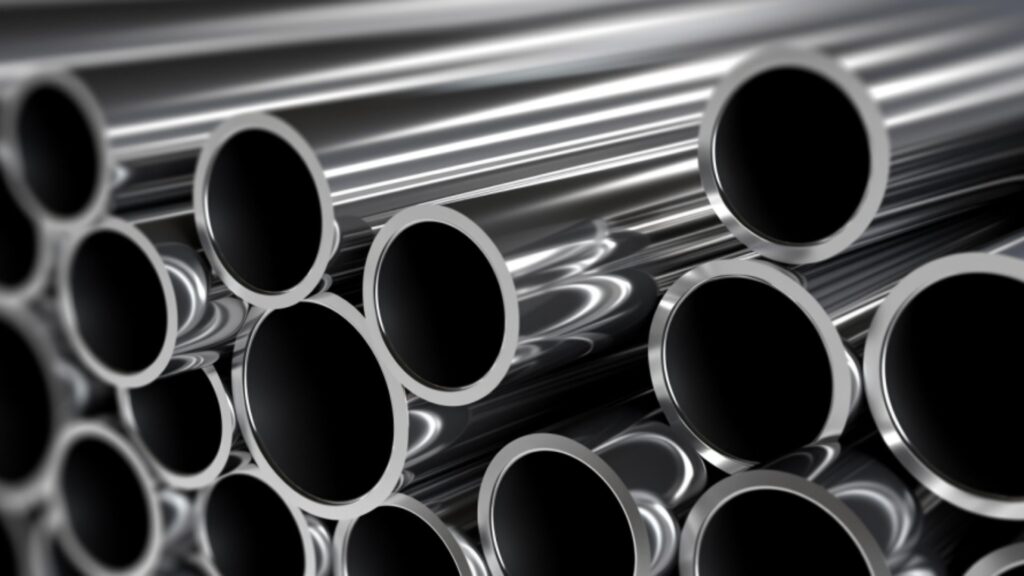
304 stainless is the default for a reason. It resists general atmospheric corrosion and most everyday chemical exposure at a reasonable cost. It is not chloride-resistant. Coastal environments, de-icing salt exposure, or chlorinated water will pit 304 over time. 316 stainless adds molybdenum specifically to resist chloride pitting, making it the standard upgrade for marine hardware, medical devices, and food processing equipment that sees regular washdown.
Duplex Stainless Steel
Duplex grades combine austenitic and ferritic microstructures, giving them higher strength than standard 300 series stainless along with strong resistance to chloride stress corrosion cracking. They cost more and machine harder, so duplex earns its place on parts where standard 316 isn’t holding up, not as a default upgrade.
Nickel Alloys
Inconel and Hastelloy sit at the top of the corrosion resistance range, built for high temperature, high pressure, or aggressive chemical environments: aerospace exhaust components, chemical processing equipment, and applications where standard stainless simply doesn’t survive. They also cost significantly more and machine slower, so specifying a nickel alloy where 316 would do is an expensive mistake in the other direction.
Aluminum
Aluminum resists corrosion through a natural oxide layer, and anodizing thickens that layer for additional protection. It’s a strong, lightweight option for general atmospheric exposure, but it’s not the right call for chloride-heavy or strongly acidic and alkaline environments without specific alloy and coating considerations.
Titanium
Titanium resists corrosion across an unusually wide range of environments, including seawater and many acids, and does it at roughly half the density of stainless steel. The tradeoff is cost and machinability. Titanium is the right call when weight and corrosion resistance both matter enough to justify the price, medical implants and aerospace fittings being the clearest examples.
Matching the Alloy to the Environment
The short version: general atmospheric exposure rarely needs more than 304. Anything touching saltwater, chlorine, or regular washdown should move to 316 as the floor. High-temperature or aggressive chemical environments call for nickel alloys. Weight-critical, corrosion-critical applications point toward titanium. Skipping this match, and defaulting to whatever the last part used, is how buyers end up either overpaying for capability they don’t need or under-speccing a part that fails in the field.
Send us the drawings with your application details and the vendor network we work with will help you land on the alloy that actually fits, not just the one that’s easiest to quote.